
The 7 Root Causes Behind Most “Sick Houseplant” Cases
Most houseplant problems trace back to seven root causes. Use a simple decision-tree mindset to diagnose before changing care routines.
Why “plant symptoms” are misleading (and how to think like a diagnostician)

A drooping pothos, yellowing leaves, or crispy tips can look like the same problem—but in houseplant care, identical symptoms often come from opposite causes. Yellow leaves might mean overwatering or chronic low light; leaf curl could be pests or hot, dry air. That’s why quick internet fixes can create expensive trial-and-error and gradual decline. Good plant diagnosis starts by separating “what you see” from “what’s actually driving it.”
Adopt a decision-tree mindset: change one variable at a time and confirm the basics before adding fertilizers, repotting, or spraying. Start with constraints (window direction, watering habits, HVAC, pets), then check the plant’s environment, soil behavior, and leaf/pest clues. In indoor gardening, the goal is not a perfect routine—it’s narrowing variables until one root cause becomes obvious.
A useful rule for plant health troubleshooting: if you can’t explain why a fix should work, pause. The best care plans are simple, measurable, and repeatable—exactly what a standardized checklist is designed to produce.
The most common root causes (1–4): light, watering patterns, soil structure, and pests
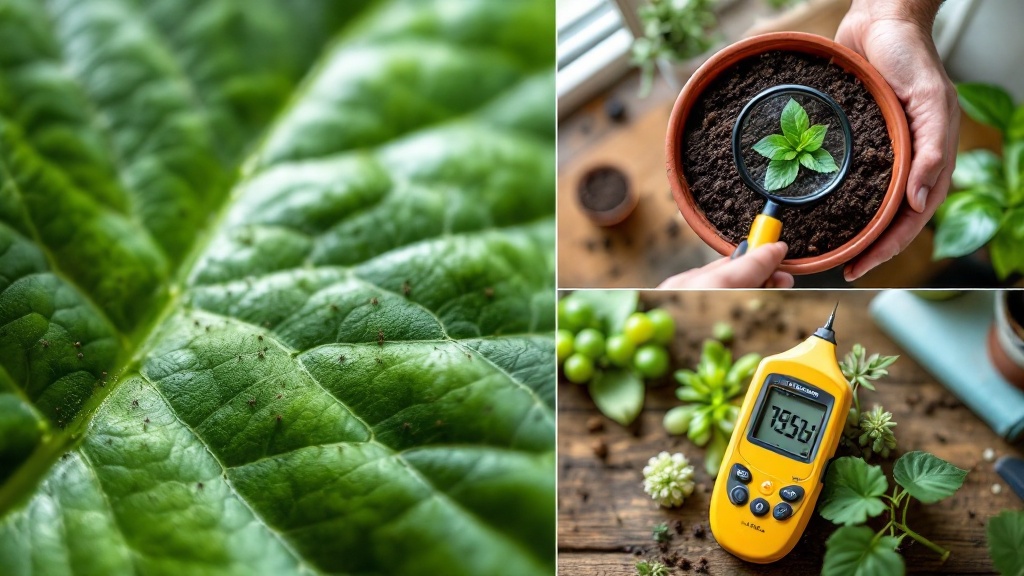
1) Light mismatch: The #1 driver of slow decline. Low light often causes legginess, small leaves, and soil staying wet too long; too much direct sun can bleach or scorch leaves. Measure what the plant actually gets (hours and intensity), not what the room “feels” like.
2) Watering patterns: It’s rarely just “too much” or “too little”—it’s timing, pot size, and evaporation. Overwatering usually means roots sit in low-oxygen soil for too long; underwatering often shows as limp growth that perks up after watering. Track how long it takes the pot to dry, then set a cadence.
3) Soil structure: Compacted or degraded mix prevents airflow and even wetting. If water runs down the sides or the top stays soggy while the core is dry, the soil’s physical structure is the issue—common in older potting media.
4) Pests: Spider mites, thrips, and mealybugs mimic nutrient issues and drought stress. In plant diagnosis, always inspect undersides of leaves and new growth before you “treat the symptoms.” This is foundational houseplant care and practical indoor gardening.
Root causes (5–7) and a simple decision tree to stop the spiral
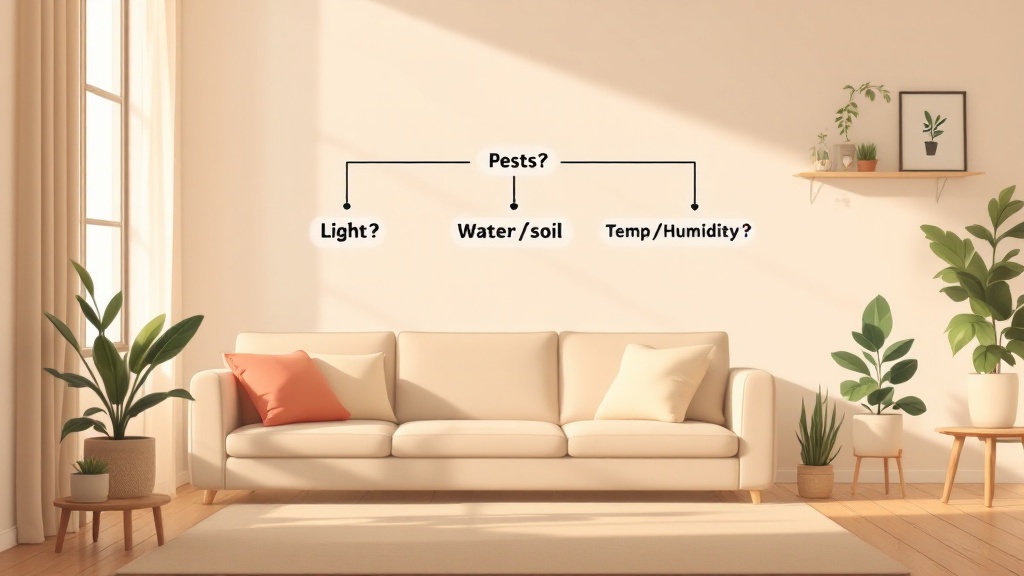
5) Temperature swings: Drafty windows, heater blasts, and doorways create stress that looks like watering trouble. Watch for damage localized to the “airflow side” of a plant. 6) Humidity: Crispy edges and stalled unfurling can come from dry indoor air—especially for tropicals—yet humidity fixes won’t help if light or soil is the real problem. 7) Pot and roots: A rootbound plant dries too fast; a pot that’s too large stays wet too long. Poor drainage and circling roots both reduce oxygen, leading to slow decline.
Here’s a practical decision tree for plant health troubleshooting: (1) Check for pests first. (2) Confirm light match for the species and season. (3) Test soil moisture and how evenly the mix wets. (4) Evaluate pot size, drainage, and root condition. (5) Only then tune humidity and temperature exposure. Make one change, observe for 7–14 days, and document results.
This approach is the backbone of consistent plant diagnosis—and it’s why services like Houseplant Housecall use standardized checklists and follow-ups to prevent repeat stress. Less guessing, more resilient houseplant care.